April 3, 2026
By Jenna Bayer | April 3, 2026
Outdoor living in the Pacific Northwest is about more than extending the use of a yard. It is about shaping a landscape that feels inviting, resilient, and deeply connected to the region. With thoughtful planning, outdoor spaces can support gathering, quiet retreat, and daily living through shifting weather, changing light, and every season of the year.
Working with a professional landscape designer makes it possible to approach the yard as a true extension of the home. From planting and circulation to outdoor fireplaces, kitchens, and covered gathering spaces, each element can be considered as part of a cohesive and enduring landscape experience.
Designing for the Pacific Northwest Lifestyle
The Pacific Northwest climate encourages outdoor living well beyond the summer months. With the right design approach, homeowners can enjoy their outdoor spaces comfortably through much of the year.
Effective landscape design considers seasonal rainfall, drainage, natural light, and the need for shelter. Evergreen structure, layered plantings, and defined outdoor rooms help keep landscapes visually appealing even in the winter. When a landscape is designed with the environment in mind, it becomes resilient, low maintenance, and easy to enjoy.
Sustainability as the Foundation of Landscape Design
Sustainability plays a central role in successful landscape design. Thoughtful planning reduces environmental impact while creating outdoor spaces that thrive over time.
At Jenna Bayer Garden Design, sustainable practices include efficient irrigation layouts, soil focused design strategies, reduced lawn areas, and durable materials that hold up to the Pacific Northwest climate. A sustainable landscape requires fewer resources, supports long term plant health, and benefits both homeowners and the surrounding environment.
The Role of Native Plants
Native plants are essential to sustainable landscapes in the Pacific Northwest. These plants are well adapted to local soils, rainfall patterns, and temperatures.
Using native plants helps reduce water use once plants are established and supports local pollinators and wildlife. Native plant selections also provide a strong sense of place. When used thoughtfully, they can feel polished and intentional while blending naturally with both modern and traditional landscape designs.
Coordinating Outdoor Living Elements
A successful outdoor space connects plants, structures, and functional features into a unified design. Outdoor living elements should feel integrated rather than added as standalone features.
Outdoor Fireplaces and Fire Pits
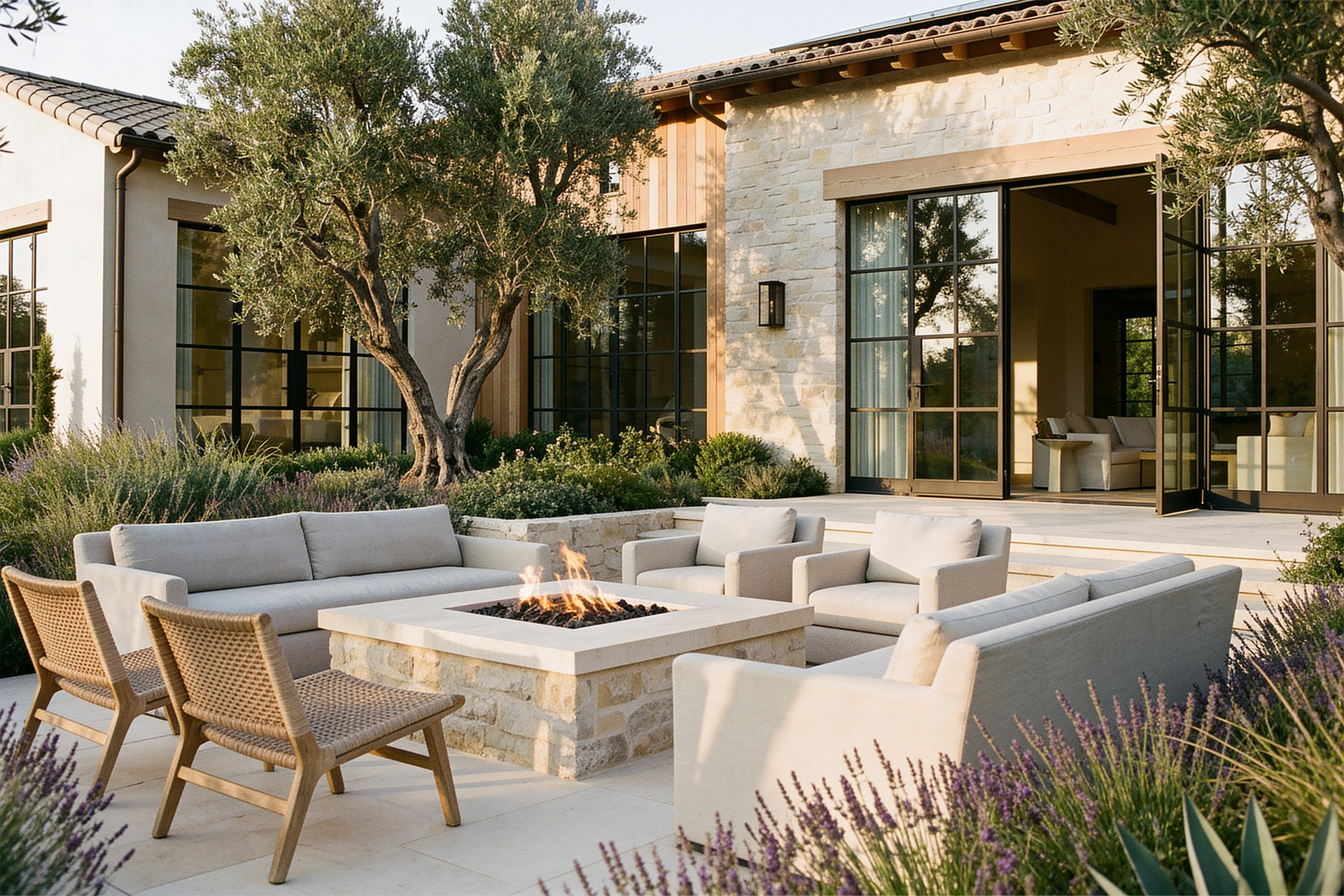
Fire features create warmth and visual interest while extending the usability of outdoor spaces into cooler months. In the Pacific Northwest, outdoor fireplaces and fire pits allow families and guests to gather comfortably year round.
Outdoor Kitchens and Dining Areas
Outdoor kitchens support entertaining and everyday living. Proper placement, weather resistant materials, and plant integration ensure that cooking and dining spaces feel like a natural part of the landscape.
Pergolas and Covered Structures
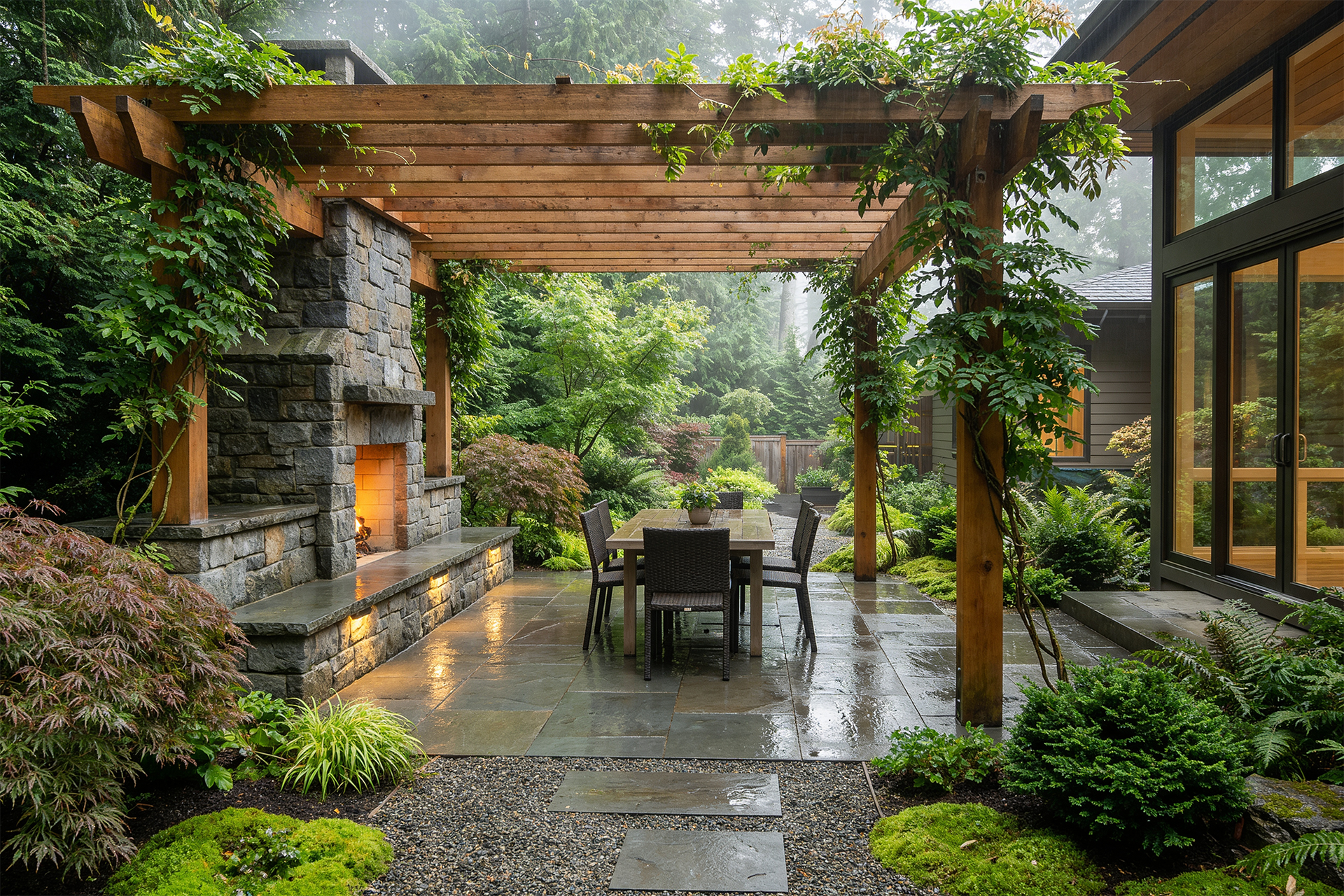
Pergolas and pavilions offer protection from sun and rain while creating defined outdoor rooms. These structures make it possible to enjoy outdoor spaces comfortably in all seasons.
Landscape Lighting
Lighting enhances safety and atmosphere while highlighting architectural and natural features. Well planned landscape lighting brings warmth and usability to outdoor spaces after dark.
When coordinated by an experienced landscape designer, these features work together seamlessly and elevate the entire outdoor environment.
Creating Intentional Outdoor Rooms
Strong landscape design relies on flow and balance. Pathways guide movement through the garden, plants soften hardscape edges, and materials echo the architecture of the home.
Designing the landscape as a series of outdoor rooms allows each area to serve a clear purpose. Whether the goal is relaxation, entertaining, or family use, intentional planning ensures that every element supports the larger design.
The Value of Working With a Landscape Designer
A professional landscape designer brings technical knowledge, aesthetic expertise, and long term vision to each project. Beyond plant selection, a landscape designer coordinates materials, contractors, and site conditions to ensure a cohesive result.
At Jenna Bayer Garden Design, projects begin with understanding how clients want to use their outdoor spaces. That vision is then translated into a sustainable, functional landscape that fits naturally into the Pacific Northwest surroundings.
Outdoor Living Designed for the Pacific Northwest
Outdoor living in the Pacific Northwest is about creating balance between beauty, function, and sustainability. Through thoughtful plant selection, native landscapes, and coordinated outdoor features, a well designed landscape becomes an inviting extension of the home.
With professional guidance from a landscape designer, outdoor spaces can be transformed into environments that feel intentional, enduring, and uniquely suited to the region.